The Lakesong logo features a heron, and if you walk down to the water’s edge, you may see the real thing standing perfectly still in the shallows. The heron isn’t just a design choice. It’s one of the community’s longtime residents.
Lakesong sits in southwestern Grand Prairie, between Padera Lake and Joe Pool Lake, in a landscape of shallow ponds, creeks, and mature trees that herons have depended on for generations. Lakesong was planned around that water and set aside land specifically for the birds. Here’s a closer look at the heron family, the species behind the logo, and why Lakesong suits them so well.
The Heron Family
Herons, egrets, and bitterns all belong to one bird family, Ardeidae, with more than 60 species worldwide. The names come from tradition rather than science. “Egret” usually refers to the white-plumaged members of the family, but as this Texas heron and egret ID guide explains, egrets are herons too.
Every member of the family is built for hunting in shallow water, with long legs for wading, a long flexible neck, and a sharp, straight bill that works like a spear.
People often mistake herons for cranes, but there’s an easy way to tell them apart in the air. A heron flies with its neck folded into an S shape, while a crane flies with its neck stretched straight out.
Why the Heron Represents Lakesong
When Huffines Communities began planning Lakesong, the heron was a natural fit. It’s native to the ponds and creeks on this land, and it reflects the patience, poise, and calm the community was designed around.
Great Blue Heron: The Species Behind the Logo
Quick facts: Great blue heron
Scientific name: Ardea herodias | Height: about 4 ft | Wingspan: up to 6 ft | Weight: about 5 lb | Clutch: 2 to 6 eggs | Incubation: 27 to 29 days | Time in nest: 7 to 11 weeks | Diet: mainly fish, plus frogs, crayfish, snakes, insects, and small mammals | Status: year-round Texas resident, protected under the federal Migratory Bird Treaty Act
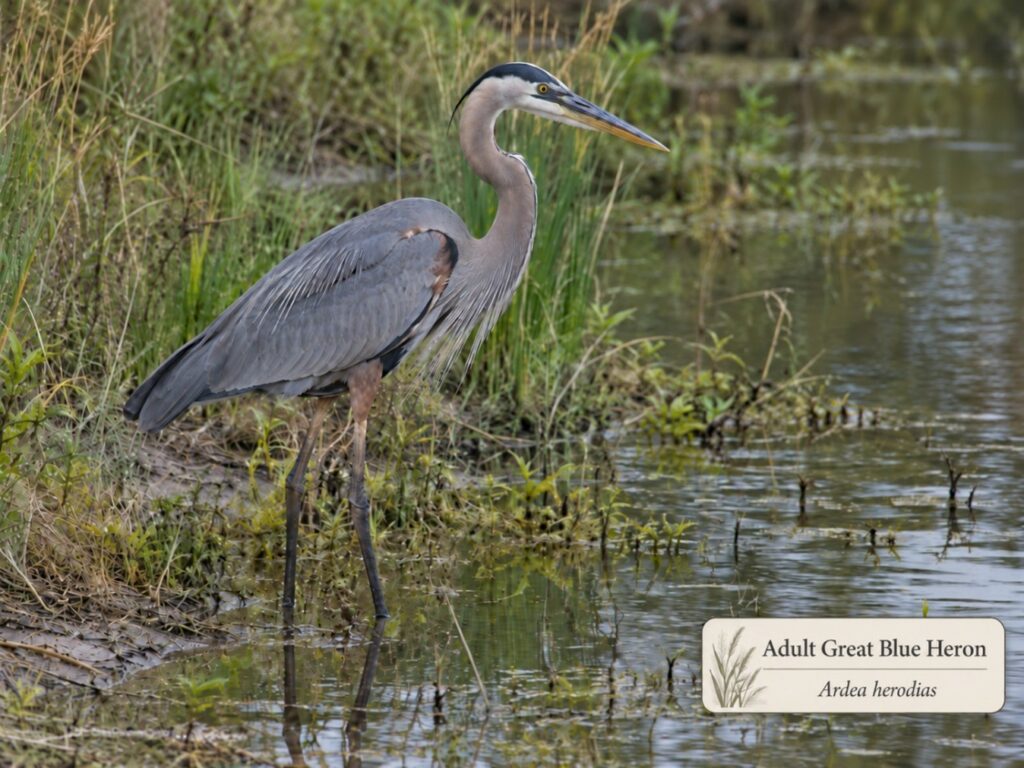
The great blue heron is the largest heron in North America and the species featured in the Lakesong logo. Adults stand about four feet tall with a wingspan nearing six feet, yet weigh only about five pounds. Look for slate gray-blue feathers, a white face with a black stripe running back from the eye, and rust-colored thighs.
What they eat. Great blue herons are patient, opportunistic hunters. Fish make up most of their diet, but according to the Cornell Lab of Ornithology, they’ll take nearly any animal within striking distance, including frogs, crayfish, snakes, insects, and rodents. They hunt by standing motionless or wading slowly through shallow water, then striking with a lightning-fast thrust of the neck.
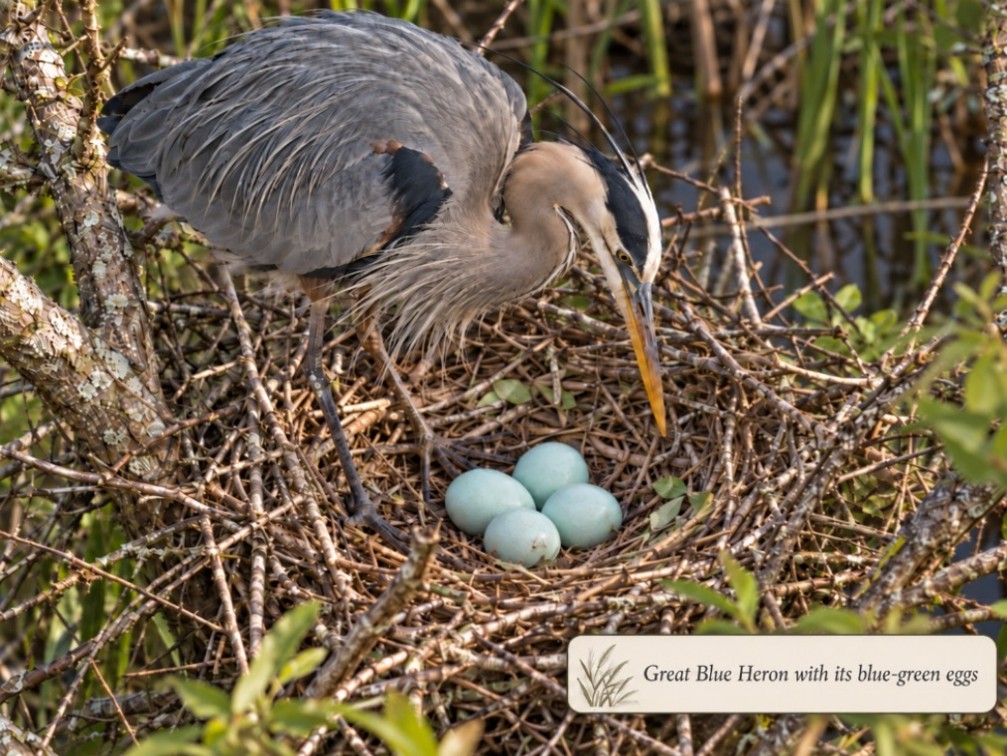
How they nest. Great blue herons nest from late winter through spring, and by early summer most young have left the nest. They nest in colonies called rookeries, usually high in trees near water and often alongside other herons and egrets. The male gathers sticks while the female weaves them into a platform nest, which the pair may reuse and expand year after year. Both parents take turns incubating 2 to 6 pale blue-green eggs for 27 to 29 days, and the young stay in the nest for 7 to 11 weeks before they fledge.
What they sound like. For a community called Lakesong, it’s worth knowing that herons aren’t songbirds. The great blue heron’s call is a deep, rough croak, most often heard at dawn or when a bird is startled into flight. It’s not a melody, but once you know it, you’ll recognize it.
Where they live. Great blue herons feed in shallow water along pond edges, creek banks, and lake shorelines, and they nest and roost in mature trees nearby. At Lakesong, the Main Pond and the community’s smaller ponds offer shallow feeding water with tree cover close by, all within 700 acres of open space and trails.
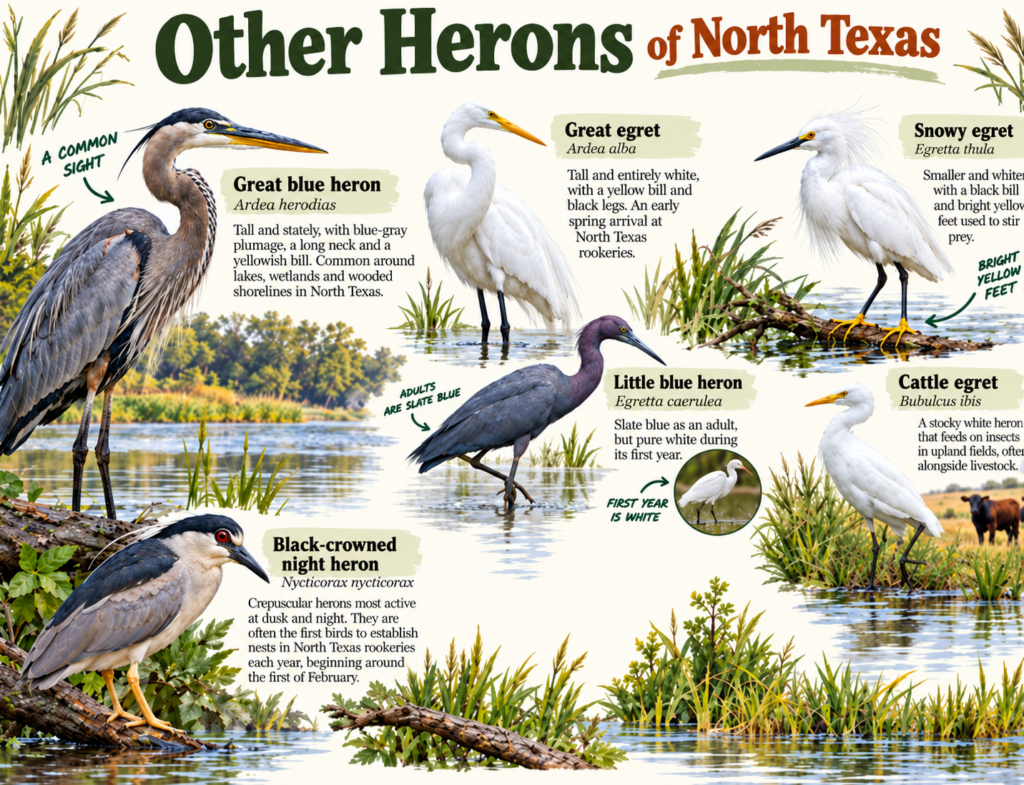
Other Herons of North Texas
The great blue heron isn’t the only member of the family in the neighborhood. Here are the herons and egrets you’re most likely to spot around Grand Prairie and Joe Pool Lake.
Heron Watching at Lakesong
Your best chance to see a heron is early in the morning or near sunset, when they’re most actively feeding. Walk the trails slowly and scan the shallow edges of the ponds, where a heron standing still can be surprisingly easy to miss.
To keep the herons coming back, watch from a distance and give the birds plenty of space, especially during nesting season in late winter and spring. Keep dogs leashed near the water, and never feed herons or other wildlife.
Spotted a heron at Lakesong? Share your photos with us on social media, and explore the community trails to plan your next walk.
Heron FAQs
What bird is in the Lakesong logo?
The Lakesong logo features a heron, inspired by the great blue herons native to the community’s ponds and creeks.
Do herons live at Lakesong year-round?
Great blue herons are year-round residents in Texas, so they can be seen in North Texas in every season.
How can you tell a heron from a crane?
Watch them fly. Herons fold their necks into an S shape in flight, while cranes keep their necks stretched straight out.
Are herons protected?
Yes. Great blue herons and their relatives are protected under the federal Migratory Bird Treaty Act, which makes it illegal to harm the birds or disturb their active nests.
Sources: Cornell Lab of Ornithology | City of Arlington | Texas Master Naturalist, Blackland Prairie Chapter